“My teeth feel fine—why do I need an X-ray?” It is a reasonable question. So is asking why a family member needs images more often than you do.
Dental X-rays help answer questions that a visual examination cannot. The useful discussion is what the image could reveal, whether an earlier image already provides that information and how the result may affect your care.
What Can Dental X-Rays Show?
Depending on the image taken, X-rays may help your dentist assess:
- Decay between teeth or in areas that are difficult to inspect
- Changes around a tooth’s root that may suggest infection
- Bone supporting the teeth
- The position of unerupted or impacted teeth
- Findings relevant to treatment planning or follow-up
An X-ray is one piece of information. It is interpreted alongside your symptoms and clinical examination. It cannot show every problem, and a normal-looking image does not necessarily explain away persistent pain.
Which Type of Image Might You Need?
Different images answer different questions. A larger image is not automatically more useful.
| Image | Common purpose |
|---|---|
| Bitewing | Shows upper and lower tooth crowns together; useful for decay between back teeth and assessing nearby bone levels |
| Periapical | Shows the whole tooth, including its root and surrounding bone; useful when investigating a specific tooth |
| Panoramic | Gives a broad view of the teeth and jaws; may help assess tooth development or wisdom teeth |
| Cone-beam CT (CBCT) | Produces three-dimensional information for selected situations, such as certain surgical or complex treatment-planning needs |
A panoramic image does not provide the same fine detail as images taken inside the mouth. CBCT is not a routine replacement for ordinary dental X-rays; your dentist should explain why three-dimensional information is needed.
How Often Should You Have Dental X-Rays?
There is no single timetable that suits everyone. A person with stable oral health and little recent decay may need imaging less frequently than someone with active disease or a changing clinical concern.
The decision may take account of:
- Recent cavities and current risk of developing new ones
- Gum and supporting-bone findings
- New pain, swelling or injury
- Age and stage of tooth development
- The quality, date and coverage of previous images
- A treatment that needs planning or review
Your schedule can change as your oral health changes. A routine cleaning appointment is not, by itself, a reason to take another set of X-rays. The ADA’s 2026 recommendations emphasize selecting imaging after reviewing history, previous images and current examination findings.
Why Take Images When Nothing Hurts?
Some dental problems do not cause noticeable symptoms early on. For example, a dentist may recommend bitewings to assess surfaces between teeth that cannot be inspected directly.
That does not mean every symptom-free patient needs new images. Ask which areas need assessment and what information the proposed image would add to the examination.
Our Dental Exams & Hygiene services combine clinical assessment with imaging when appropriate for your needs.
Can Your Previous Dentist Send Existing X-Rays?
Yes. Ask about transferring them before your appointment. Useful existing images may avoid unnecessary repeat exposure.
Your new dentist will consider whether the images are recent enough, clear enough and show the areas being assessed. Additional images may still be needed if you have a new symptom or the available records do not answer the current clinical question. Changing dental offices does not automatically make all previous images unusable.
What About Radiation?
Dental X-rays use ionizing radiation. Exposure from many common dental images is low, but doses vary with the type of examination, equipment and settings. A small intraoral image and a CBCT scan should not be described as having the same exposure.
The goal is to obtain the information needed for care while limiting unnecessary radiation. Selecting the right examination, restricting the exposed area and positioning carefully all matter. “Digital” does not mean radiation-free or that images should be taken without a clinical reason.
If you are concerned, ask: “What benefit do you expect from this image, and could an existing image answer the same question?”
Do Children Need a Different Approach?
Yes. Recommendations reflect the child’s age, developing teeth, cavity risk and examination findings. Images may help assess decay between teeth or investigate an eruption concern that cannot be answered by looking alone.
There is no automatic birthday when every child must have the same X-rays. The team should select images for a specific purpose and use techniques suited to the child’s size. Tell them if your child has difficulty tolerating a sensor or staying still so they can discuss a suitable approach.
What if You Are Pregnant?
Tell the dental team if you are pregnant or may be pregnant. Necessary dental X-rays can be taken during pregnancy when clinically indicated; pregnancy does not automatically mean that assessment of pain or infection must wait.
Your dentist will consider the reason for imaging and the appropriate technique. Ask questions rather than delaying needed care because of a general fear of X-rays.
Four Questions Worth Asking Before an X-Ray
- What are you looking for, and how could the result change my care?
- Can you use images from my previous dentist?
- Why is this type of image the right choice?
- What is the fee, and what portion might my dental plan pay?
Insurance frequency limits are payment rules, not a personalized imaging schedule. Ask for an explanation of both clinical need and expected cost.
Frequently Asked Questions
Do I need X-rays at every cleaning?
Not necessarily. The decision should reflect your oral health and the information your dentist needs, rather than simply the date of your cleaning.
Why might my dentist take only one or two images?
A focused concern may require a focused image. Investigating one tooth does not always require a full series or panoramic examination.
Do dental X-rays hurt?
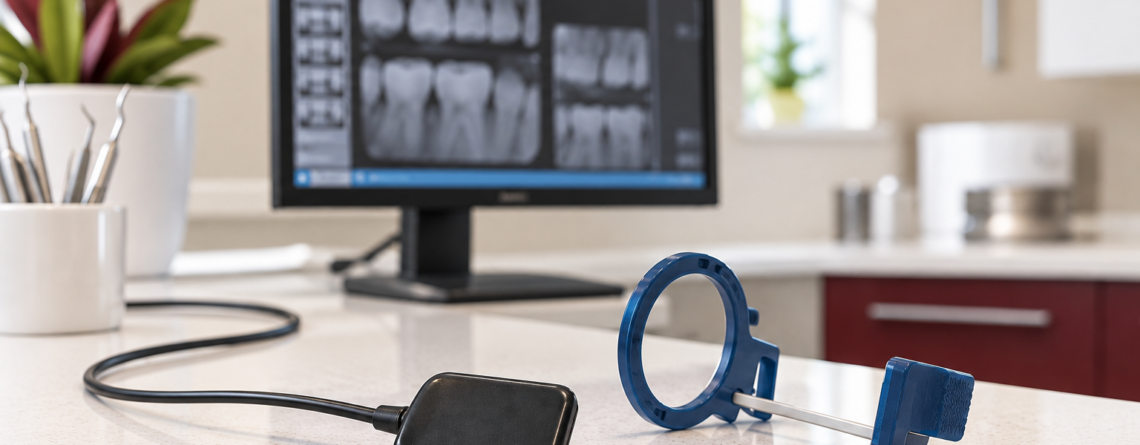
The exposure itself is not felt. An intraoral sensor or holder can feel bulky. Tell the team about gagging or discomfort so they can consider positioning adjustments or other appropriate options.
Why do some offices use a lead apron while others do not?
Guidance has changed. The ADA no longer recommends routine abdominal or thyroid shielding for dental imaging, but local requirements and practice protocols may differ. Ask your dental team which guidance applies to your examination.
Sources
- Canadian Dental Association: Regular Dental Checkups
- Canadian Academy of Oral and Maxillofacial Radiology: Healthy Mouth—Dental X-Rays
- CAOMR: 3D Dental Imaging (CBCT)
- CAOMR: Radiography and Kids
- CAOMR: Dental Radiography and Pregnancy
- American Dental Association: 2026 Dental X-Ray Recommendations
- American Dental Association, MouthHealthy: X-Rays
This article provides general information. The need for dental imaging should be assessed individually by your dentist.