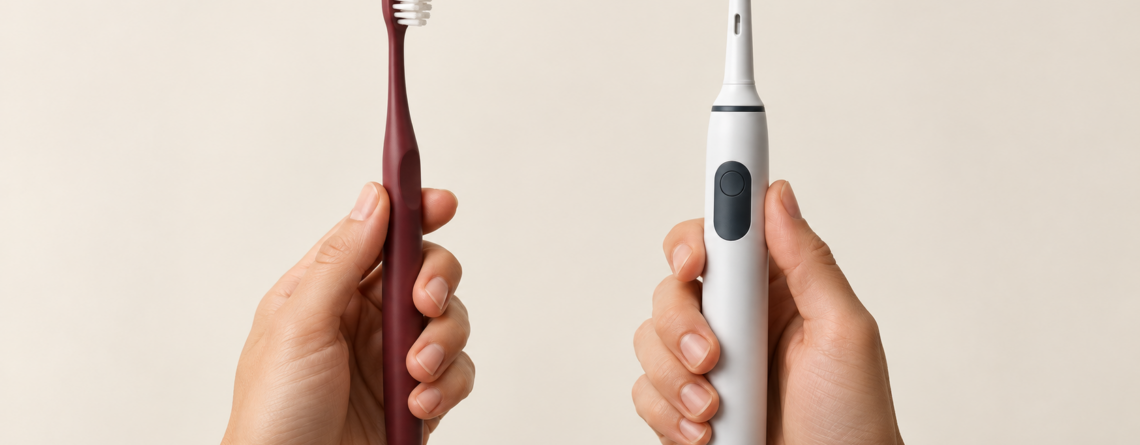
Choosing a toothbrush can feel more complicated than it should. Electric models offer timers, pressure alerts and different brushing modes, while a simple manual brush costs less and is easy to take anywhere. Does spending more actually mean cleaner teeth?
Both types can clean effectively. The most useful choice is one you can handle comfortably and use thoroughly every day. An electric brush may help with particular difficulties, but it still needs good technique.
What Does the Research Say?
A Cochrane review, with evidence current to 2014, found that powered brushes reduced plaque and gum inflammation more than manual brushes on average. The implications for long-term dental health remained uncertain, so this does not guarantee fewer cavities or mean every electric model is better for every person.
Your own technique matters. Ask your dental team: “Are there areas I keep missing, and would a different brush help?”
Electric and Manual Toothbrushes at a Glance
| Consideration | Manual toothbrush | Electric toothbrush |
|---|---|---|
| Cost | Usually less expensive; replace the whole brush | Higher initial cost, plus replacement heads |
| Cleaning motion | You make and control the brushing movements | The head moves; you guide its position |
| Hand coordination | Requires comfortable grip and controlled movements | May help when repetitive hand movements are difficult |
| Timing and pressure | Use your own timer and monitor pressure | Some models offer timers and pressure alerts |
| Travel | Lightweight and requires no power | Requires charging or replacement batteries |
| Comfort | Quiet, without vibration | Noise and vibration vary by model |
A practical way to choose: If you brush thoroughly and comfortably with a manual brush, it remains a reasonable choice. If timing, pressure or hand movements are a struggle, consider an electric brush with features that address that difficulty.
When Is a Manual Toothbrush a Good Choice?
Choose soft bristles and a head that fits comfortably around your back teeth. A larger head is not necessarily more useful if it is difficult to manoeuvre. If your dental team finds that you are cleaning effectively and your brush is comfortable, there may be little reason to change your routine.
When Might an Electric Toothbrush Help?
Powered movement can reduce the amount of repetitive brushing motion you need to make. This may help people with arthritis, reduced hand coordination or difficulty managing a manual brush. Some people with braces also find a powered brush easier to use.
Before buying, check these features:
- A two-minute timer: useful if you tend to finish brushing too quickly
- A pressure sensor: feedback if you press too firmly
- A comfortable handle: easier to hold and control
- A suitable brush head: able to reach the areas you need to clean
- Accessible replacement heads: practical to buy and replace regularly
Also consider whether you are comfortable with the vibration and sound. Extra modes, an app or a display may appeal to you, but prioritize features that help you brush consistently.
How Do You Use Each Type Properly?
With a manual brush, place the bristles near the gumline at approximately a 45-degree angle. Use gentle, short movements, covering the outside, inside and chewing surfaces. Avoid vigorous back-and-forth scrubbing.
With an electric brush, follow the instructions for that model. Many are designed to be guided slowly from tooth to tooth while the moving head does the cleaning. You still need to position it carefully along the gumline and reach the inner surfaces and back teeth.
Bring your brush or a photo of it to your next appointment if you would like a demonstration. Small adjustments to positioning can be more useful than buying a different model.
What If You Have Sensitive Teeth or Receding Gums?
Choose soft bristles and gentle pressure with either type. An electric brush with a pressure alert may help if you tend to press hard, but it does not make excessive pressure harmless.
Persistent sensitivity, bleeding or discomfort deserves an assessment. Changing brushes may improve your technique, but it cannot identify or treat every cause of these symptoms. Your dentist or hygienist can help you choose an approach suited to your gums and any exposed tooth roots.
Which Is Better for Children?
Comfort and cooperation are important. Some children enjoy a powered brush; others dislike the vibration or sound and do better with a manual one. Choose an age-appropriate brush with soft bristles and a head that fits the child’s mouth.
A powered brush does not replace a parent’s help. Children need assistance or supervision while developing the coordination to clean thoroughly. Ask the dental team to demonstrate brushing and advise on fluoride toothpaste use for your child.
Do You Still Need to Clean Between Your Teeth?
Yes. Neither type reliably cleans every surface between the teeth. Daily flossing or another suitable interdental aid remains part of home care.
If floss is difficult to manage, ask about alternatives that suit the spaces between your teeth and any braces, bridges or implants. Our Dental Exams & Hygiene services include the opportunity to discuss your home-care routine.
Frequently Asked Questions
Do I need an expensive electric toothbrush?
Not necessarily. Prioritize comfort, suitable soft heads and features you will use. A basic model that helps you brush thoroughly may fit your needs better than one with many settings.
How often should I replace my brush or brush head?
Generally, every three to four months, or sooner if the bristles become worn or frayed. This applies to manual brushes and replaceable electric heads.
Can I use an electric toothbrush with fillings or crowns?
Usually, yes. Use it gently and follow any specific instructions after recent treatment. Ask your dentist about cleaning around restorations, implants or appliances that need particular care.
Should I stop brushing if my gums bleed?
Do not respond by scrubbing harder or abandoning daily cleaning. Continue gentle care and arrange an assessment if bleeding persists or recurs. Read our guide to bleeding gums for more information.
Sources
- Canadian Dental Association: Flossing & Brushing
- American Dental Association: Toothbrushes
- American Dental Association, MouthHealthy: Brushing Your Teeth
- Cochrane: Powered/Electric Toothbrushes Compared With Manual Toothbrushes
This article provides general information and is not a substitute for personalized advice from your dentist or dental hygienist.