Crowns, bridges and fillings
restore damaged or missing teeth, improve function and help protect oral
health. A common question after treatment is, “How long will it
last?”
The honest answer is that no dental restoration comes with a
universal expiry date. Its lifespan depends on the type of restoration,
the material, the amount of tooth structure remaining, the forces placed
on it and how well the tooth and surrounding gums are maintained.
Typical
Lifespans Are Estimates, Not Guarantees
Published patient guidance commonly describes average lifespans of
approximately five to 15 years for crowns and fixed
bridges. Some last considerably longer, while others need
earlier repair or replacement. Research also shows that many crowns
remain functional at 10 years, but results vary according to the tooth,
material and clinical situation.
Fillings are even more variable. A small filling in a low-stress area
may last much longer than a large filling on a heavily loaded back
tooth. Material matters, but the size and location of the restoration,
the patient’s cavity risk and the condition of the remaining tooth are
often just as important. For that reason, an individual examination is
more useful than relying on one number.
What Is the
Difference Between These Restorations?
Dental fillings
A filling replaces a portion of a tooth damaged by decay, wear or
fracture. Tooth-coloured composite is commonly used, although other
materials may be appropriate in certain circumstances.
Dental crowns
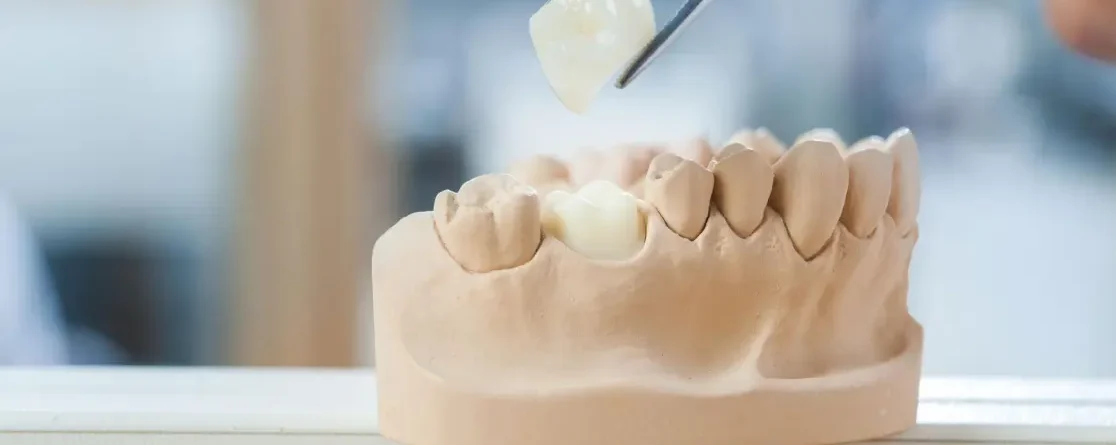
A crown covers and protects much of the visible part of a weakened or
extensively restored tooth. Crowns may be recommended after significant
damage or root canal treatment, depending on how much sound tooth
structure remains and how the tooth functions in the bite.
Dental bridges
A fixed bridge replaces one or more missing teeth. It is supported by
neighbouring teeth, dental implants or a combination determined by the
treatment design. The health of the supporting teeth and gums plays a
major role in how well a bridge performs over time.
What Can Shorten the
Life of a Restoration?
Several factors can increase wear or the chance of failure:
- New decay: A crown or filling cannot develop decay,
but the natural tooth can decay at its edges. - Gum disease: Inflammation and loss of support
around teeth can affect crowns and bridges. - Teeth grinding or clenching: Heavy bite forces may
chip porcelain, wear filling material or fracture the supporting
tooth. - Chewing hard objects: Ice, hard candies, pens and
unpopped popcorn kernels can damage both natural teeth and
restorations. - Large restorations: The more natural tooth
structure that has been lost, the more complex the long-term prognosis
may be. - Dry mouth: Reduced saliva can increase cavity risk,
particularly around restoration margins. - Irregular dental care: Early wear, a loose margin
or decay may progress without obvious symptoms.
Normal wear does not always mean that a restoration must be replaced.
In some situations, smoothing, adjustment or repair may be possible. The
appropriate choice depends on the restoration and the health of the
underlying tooth.
How to Help
Crowns, Bridges and Fillings Last
The same habits that protect natural teeth also help protect
restorations:
- Brush twice daily with fluoride toothpaste.
- Clean between the teeth every day using floss or another method
recommended by your dental team. - Clean carefully under and around a bridge using floss threaders,
interdental brushes or other suitable aids. - Attend examinations and professional cleanings at intervals
recommended for your individual oral health. - If you grind or clench your teeth, ask whether a custom night guard may be appropriate.
- Avoid using your teeth to open packaging or bite hard non-food
objects. - Address dry mouth, frequent snacking and other cavity-risk factors
with your dentist or healthcare professional.
A restoration can look intact while a problem develops at an edge or
underneath it. Routine assessment helps your dentist monitor the
restoration, supporting tooth, bite and gums.
Signs That a
Restoration Should Be Checked
Contact a dental office if you notice:
- A crown, bridge or filling that feels loose
- A chipped, cracked or missing piece
- Pain when biting or chewing
- New or persistent sensitivity to hot, cold or sweets
- Food repeatedly becoming trapped around the restoration
- Floss shredding or catching at an edge
- Swelling, bleeding or tenderness of nearby gums
- A change in your bite
- An unusual taste or odour around a crown or bridge
Sudden severe pain, facial swelling, fever, trauma or difficulty
swallowing requires prompt professional assessment. Call the dental
office so the urgency can be evaluated.
Does an Old
Restoration Always Need Replacement?
Age alone does not determine whether a restoration needs replacement.
A restoration that is older but stable, functional and easy to clean may
continue to be monitored. Replacing it unnecessarily can remove
additional natural tooth structure.
On the other hand, delaying treatment when there is decay, fracture,
leakage, pain or loss of support may allow the problem to become more
extensive. Your dentist can examine the restoration and explain whether
monitoring, repair or replacement is appropriate.
Protecting Your Restored
Smile
Crowns, bridges and fillings are designed to restore function, but
they still require regular care. Good cleaning, appropriate bite
protection and routine assessment can improve the chance that they
remain comfortable and useful for many years.
If you have an older restoration, notice a change or would like it
assessed, contact Maple Ridge Dental Centre
at 604-463-2536 to
arrange an appointment.
This article provides general information. Longevity estimates
vary and do not guarantee the outcome of any individual
restoration.
Frequently Asked Questions
Can a crown get a cavity?
The crown material itself does not decay, but the natural tooth can
develop decay where the crown meets the tooth. Daily cleaning and
regular assessment remain important.
Is a loose bridge an
emergency?
A loose bridge should be assessed promptly. Avoid chewing on it and
do not attempt to glue it yourself. Call the dental office for
instructions, particularly if you also have pain, swelling or
trauma.
Should every old filling
be replaced?
No. Age alone is not a reason to replace a filling. The dentist
considers the seal, tooth structure, symptoms, decay risk, function and
radiographic findings when deciding whether to monitor, repair or
replace it.
Sources
- Canadian Dental Association: Crowns—Restoring
Damaged Teeth - Canadian Dental Association: Bridges
- Canadian Dental Association: Dental
Fillings Overview - Cleveland Clinic: Dental
Crowns and Dental
Bridges - PubMed: Longevity of Posterior
Composite Restorations—Systematic Review and Meta-analysis