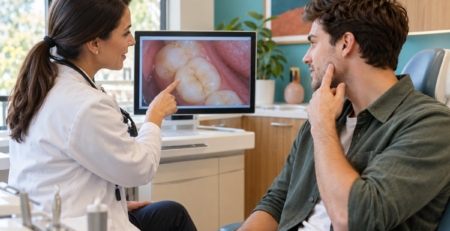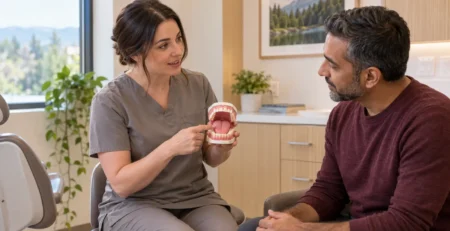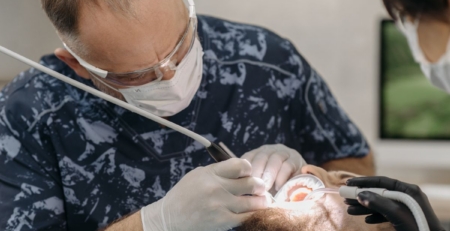
A dental examination involves more than looking for cavities. When your dentist asks you to lift your tongue or gently feels beneath your jaw, they are checking tissues that can be difficult to see or assess yourself.
Hearing the words “oral cancer screening” can feel unsettling. Understanding what the examination involves—and what an unusual finding actually means—can make it easier to ask questions and follow up with confidence.
What Is an Oral Cancer Screening?
An oral cancer screening is a visual and physical examination for changes that could need investigation. It is often included in a dental examination, even when you have no symptoms.
Screening and diagnosis are different. Finding a patch or lump does not mean that you have cancer. Irritation, infections and other non-cancerous conditions can also change how oral tissues look or feel. If an area is concerning, further assessment—and sometimes a biopsy—is needed to establish the cause.
Which Areas Does Your Dentist Check?
The examination extends beyond your teeth. Your dentist may assess:
| Area | What the examination involves |
|---|---|
| Lips and inner cheeks | Looking for sores, patches and changes in the tissue lining |
| Tongue | Checking the top, sides and underside, including areas hidden at rest |
| Floor and roof of the mouth | Looking and feeling for unusual changes |
| Gums and surrounding tissues | Assessing persistent irritation, swelling or abnormal areas |
| Jaw and neck | Gently feeling for lumps or swelling |
You may be asked to move your tongue or open wider. Removable dentures may need to come out so the tissues underneath can be examined. Tell the dentist if an area is tender; the examination can be adjusted for your comfort.
Our Dental Exams & Hygiene page explains how this assessment fits into a broader dental visit.
What Should You Tell the Dental Team?
Point out a change even if it does not hurt. Explain when you first noticed it, whether it has changed and whether it disappears completely or keeps returning.
Useful information includes new medicines, previous oral lesions or cancer treatment, tobacco use and alcohol use. Mention chewing products such as betel quid or areca nut as well. These conversations help guide care; they are not a judgment about your habits.
If a spot comes and goes, a dated photo can help you explain its history. A photograph supports the conversation but cannot replace an examination.
Which Changes Should You Have Checked?
Contact a dentist or doctor about:
- A mouth or lip sore that has not healed within two weeks
- A persistent red or white patch
- A new lump, thickened area or unexplained neck swelling
- Unexplained bleeding or numbness
- Ongoing difficulty chewing, swallowing or moving your tongue
- Persistent hoarseness or a feeling that something is stuck in your throat
These symptoms can have several causes. Arrange an assessment rather than trying to identify the cause from online photographs. Do not wait for your next routine cleaning to mention a persistent change.
Two weeks is a reminder to follow up, not a requirement to wait. A rapidly changing lump, worsening symptoms or significant swallowing difficulty warrants earlier attention. Difficulty breathing or an inability to swallow saliva requires emergency care.
What Happens if Your Dentist Finds Something Unusual?
The next step depends on the appearance, location and history of the area. Your dentist may document its size and features, discuss a possible source of irritation and arrange a specific short-term reassessment.
A suspicious finding may need prompt referral or biopsy rather than observation. During a biopsy, a tissue sample is collected and examined by a specialist. This helps distinguish cancer from other conditions that may look similar.
Before you leave, make sure you understand the plan: Is a recheck booked? Who will arrange a referral? When should you expect to hear about results? If the area worsens or the expected appointment does not arrive, contact the office.
Does Screening Need a Special Light or Scan?
A careful visual and hands-on examination remains central. Special lights, dyes or commercial saliva tests should not be presented as a substitute for appropriate assessment or biopsy. The American Dental Association’s updated 2026 guidance generally recommends against routine use of these adjuncts to decide whether biopsy or referral is needed.
Ordinary dental X-rays also do not replace examination of the mouth’s lining. Imaging may be appropriate for a particular finding, but it cannot provide a general “all clear” for oral cancer.
What if You Do Not Smoke?
Avoiding tobacco reduces risk, but people without a tobacco history can still develop oral cancer. Other considerations include alcohol exposure, increasing age and sun exposure affecting the lips. HPV is particularly associated with cancers of the oropharynx—the tonsils and base of the tongue at the back of the throat.
There are limits to what a routine mouth examination can reveal in deeper throat areas. Persistent throat symptoms or a neck lump still need assessment even after a recent dental visit.
Frequently Asked Questions
Does the examination hurt?
It is usually brief and comfortable. Tell the dentist about a painful sore or sensitive area before they examine it.
Does a normal result mean I can ignore a new sore?
No. Screening reflects what can be assessed at that visit. Report new or persistent changes rather than waiting for your next scheduled examination.
Should I check my own mouth?
Being familiar with your mouth can help you notice changes. Use a mirror and good lighting, but avoid repeatedly poking or scraping a spot. A home check cannot diagnose a lesion or replace professional assessment.
How often should I have screening?
Discuss it during your regular dental examinations. Your dentist can recommend follow-up based on your history and findings; a new symptom may require a separate appointment sooner.
Sources
- Government of Canada: Oral Cancer
- National Institute of Dental and Craniofacial Research: Oral Cancer
- Canadian Cancer Society: Diagnosis of Oral Cancer
- American Dental Association: Oral Cancer Guideline
- American Dental Association: Dental Examinations Crucial in Early Oral Cancer Detection, September 2026
This article provides general information and does not replace an individual examination or diagnosis.