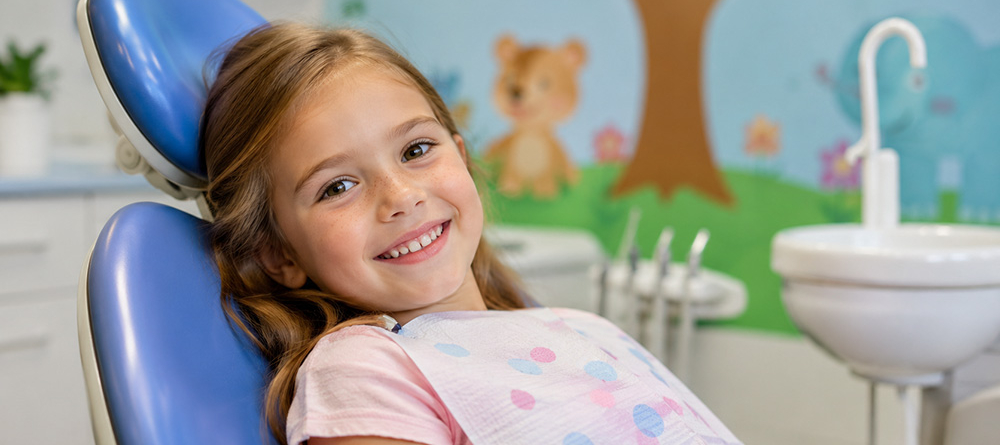
A child’s first dental visit is an important step toward a lifetime of healthy smiles. It gives parents practical guidance, allows the dental team to check early development and helps a young child become familiar with the dental office before there is an urgent problem.
The first appointment is usually short and gentle. It is less about completing complicated treatment and more about prevention, reassurance and answering your questions. Knowing what to expect can help the visit feel easier for both you and your child.
When should your child first visit the dentist?
Current guidance recommends arranging a child’s first dental examination within six months after the first tooth appears and no later than the first birthday. This may sound early, but cavities can begin soon after teeth erupt. An early visit allows the dentist to identify risk factors and show parents how to care for new teeth at home.
If your child is older and has not yet visited a dentist, it is still worthwhile to book. The dental team can meet your child at their current stage and develop an appropriate plan without judgment.
Why early dental visits matter
Baby teeth help children chew, speak and maintain space for permanent teeth. Keeping them healthy supports comfort and development. Early visits can help:
- Check the teeth, gums, bite and oral development
- Identify early signs of tooth decay or enamel concerns
- Review brushing technique and fluoride use
- Discuss feeding, snacks, bottles, cups and pacifier habits
- Assess the child’s individual risk for cavities
- Create a comfortable introduction to the dental environment
- Give parents a reliable place to ask questions
Preventive children’s dental care may reduce the chance that a child’s first experience with dentistry happens because of pain.
What happens at the first appointment?
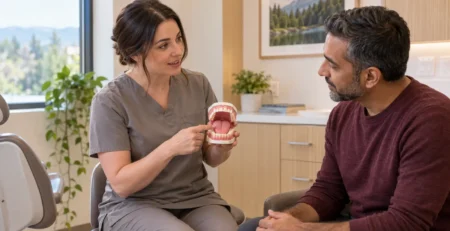
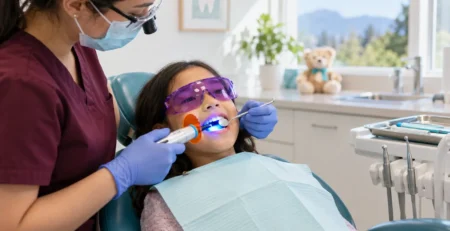
The visit is adapted to your child’s age, comfort and needs. A very young child may sit on a parent’s lap while the dentist gently examines the mouth. Older children may be comfortable sitting in the dental chair on their own.
The dental team may:
- Count and examine the erupted teeth
- Look at the gums, lips, tongue and other oral tissues
- Check how the teeth and jaws are developing
- Look for early decay, injury or developmental concerns
- Demonstrate age-appropriate brushing
- Discuss fluoride, diet and home habits
- Recommend a personalized schedule for future visits
Dental X-rays are not automatically required at every first visit. The dentist recommends them only when the child’s age, history and clinical findings indicate that the information is needed.
How to prepare your child
Use simple, positive language
Tell your child that the dentist will count and look at their teeth and help keep their smile healthy. Avoid detailed descriptions that may create worry. Words such as “hurt,” “needle” or “drill” can make a child anxious even when no such procedure is planned.
Avoid sharing your own dental fears
Children often notice a parent’s tone and body language. Try to present the appointment as a normal part of staying healthy. If you have dental anxiety yourself, you can mention it privately to the dental team so they can help support the visit.
Choose a good appointment time
Whenever possible, schedule the visit when your child is usually rested and cooperative rather than during nap time or at the end of a long day. Follow the office’s instructions about eating before the appointment.
Bring useful information
Have your child’s health history, medications, allergies and relevant concerns available. Tell the dental team about previous dental experiences, sensory sensitivities, communication needs or anything that may help your child feel more comfortable.
Practice at home
You can count teeth together, read a positive book about visiting the dentist or let your child practise opening wide in front of a mirror. Keep this playful and brief rather than turning it into a test.
What if your child feels worried?
Some hesitation is normal in a new environment. The dental team may introduce instruments slowly, use child-friendly explanations and allow time for your child to observe. A first visit does not need to be perfect to be useful.
Try not to promise a reward only if your child “behaves.” This can suggest that something difficult or frightening is about to happen. Calm praise for specific steps—such as sitting in the chair or opening their mouth—can be more helpful.
If your child has significant anxiety or additional support needs, tell the office before the appointment. Planning ahead may allow the team to adjust the timing and approach.
Dental care at home before the first visit
Oral care begins before the first tooth appears. Gums can be gently wiped with a clean, damp cloth. Once teeth erupt, brush twice daily with a soft, age-appropriate toothbrush.
For children younger than three, professional guidance commonly recommends a very small smear of fluoride toothpaste, about the size of a grain of rice. For children from three to six years, a pea-sized amount is generally used. An adult should dispense the toothpaste and help with brushing until the child has the coordination to clean all tooth surfaces effectively.
Avoid putting a child to bed with a bottle containing milk, formula, juice or another sweetened drink. Frequent exposure to sugars can increase the risk of early childhood tooth decay. Water is the best choice between regular feeding times for most children old enough to drink it safely.
After the first appointment
Keep your comments positive and simple. Praise your child for what they managed, even if the examination was brief. Follow any brushing, fluoride, diet or follow-up recommendations provided by the dentist.
The timing of future dental examinations and cleanings is based on the child’s age, development and cavity risk. A six-month interval is common, but the dentist may recommend a different schedule for an individual child.
When should you contact a dentist sooner?
Do not wait for a routine visit if your child has tooth pain, facial swelling, a broken tooth, dental trauma, bleeding that does not stop, a darkening tooth after an injury or signs of infection. Seek urgent medical help for difficulty breathing or swallowing, rapidly increasing swelling or a serious facial injury.
Frequently asked questions
Is age one too young for a dental visit?
No. The first visit is primarily preventive. It allows the dentist to examine early development and gives parents guidance before problems become established.
Can a parent stay with the child?
Approaches vary by the child’s age and the type of appointment. For infants and toddlers, a parent is commonly involved directly. The dental team can explain what will work best for your child.
What if my child cries?
Crying can be a normal response to an unfamiliar situation and does not mean the visit has failed. The team will use age-appropriate techniques and keep safety and comfort central to the appointment.
Do baby teeth really need dental care?
Yes. Baby teeth are important for eating, speaking, comfort and maintaining space for permanent teeth. Cavities in baby teeth can cause pain and infection.
Book your child’s first dental visit in Maple Ridge
A calm, preventive introduction can help your child become familiar with dental care. To arrange an appointment or ask how to prepare, contact Maple Ridge Dental Centre.
Sources
- HealthLink BC: Basic dental care from birth to 16 years
- HealthLink BC: Dental care for your infant and toddler
- American Academy of Pediatric Dentistry: Parent FAQ
This article provides general education and does not replace personalized advice from your child’s dentist or health professional.